 toplistgameh5.com
Moon Sweepers – A Complete Game Review and Beginner’s Guide

Moon Sweepers is a creative first-person cleaning and automation simulation that turns an ordinary household activity into an unexpectedly ambitious space adventure. Developed and published by DragDrop Games, the game takes players to the Moon, where an enormous cleaning operation must be completed with surprisingly limited equipment. The mission begins with a simple toothbrush, but the long-term objective is much bigger: collect lunar dust, earn money, improve equipment, establish depots, unlock cleaning vehicles, and gradually transform a small operation into an efficient lunar industry.
What makes Moon Sweepers interesting is its combination of relaxing gameplay, incremental progression, resource management, and cooperative multiplayer. Instead of fighting enemies or completing a traditional action campaign, players focus on making visible progress across the lunar surface. Every cleaned area represents a small achievement, while every upgrade creates opportunities to work more efficiently.
The game can be played alone or with an online crew of up to 16 players, making it suitable for both independent progression and shared adventures. Its humorous premise gives the experience personality, while the gradual introduction of better tools and automation provides a clear reason to keep playing.
This review explores Moon Sweepers' gameplay, exploration, cleaning mechanics, upgrades, automation, multiplayer, presentation, strengths, weaknesses, and overall value. Whether you enjoy simulation games, satisfying cleaning experiences, or cooperative projects with friends, this guide explains what makes Moon Sweepers worth considering.
1. What Is Moon Sweepers?
Moon Sweepers is a first-person cleaning and management simulation set on the lunar surface. Developed by DragDrop Games, it was released on October 23, 2026, for Windows PC through Steam. The game supports single-player gameplay and online cooperative sessions with up to 16 players. <Cite refs={["turn537111search1","turn537111search7"]}/>
Its central idea is simple but unusual. The Moon needs cleaning, and players are recruited by the fictional Lunar Surface Department to complete the enormous task. Unfortunately, the available budget is extremely limited, so the initial equipment consists of little more than a toothbrush.
This humorous starting point establishes the game's personality. Players begin with a small tool and a basic task, then gradually build a more capable operation through earnings, equipment upgrades, and improved infrastructure.
A Different Kind of Simulation Game
Many simulation games focus on construction, farming, transportation, or managing a business. Moon Sweepers takes a different approach by making cleaning the main activity.
The gameplay is built around a straightforward progression loop:
- Collect lunar dust from the surface.
- Fill your available storage.
- Deliver the collected material to a depot.
- Launch shipments to earn money.
- Purchase better cleaning equipment.
- Increase carrying capacity and improve efficiency.
- Expand the operation with vehicles and automation.
This structure is easy to understand, even for players who have never tried a management simulation before.
Who Is Moon Sweepers For?
Moon Sweepers is particularly suitable for players who enjoy relaxing simulation games, visible environmental progress, resource collection, and gradual upgrades.
It may also appeal to people who like automation games because the experience eventually develops beyond manual cleaning. Players can build systems that reduce repetitive work and make their lunar operation more productive.
Those who prefer constant action, complicated combat, or a story-driven adventure may find its slower pace less appealing.
2. Starting Your First Lunar Cleaning Mission
The opening stages of Moon Sweepers introduce players to the basic cleaning and resource-collection system.
Starting with a toothbrush is deliberately humorous, but it also establishes the game's progression philosophy. Players must begin with limited capabilities and earn their way toward better equipment.
The early experience is relatively simple. You move across the lunar surface, clean dusty areas, collect the material, and return to a depot to exchange your collected resources for money.
Understanding the Basic Gameplay Loop
The first important lesson is that cleaning and transporting resources are connected activities.
Collecting dust is only one part of the process. Players also need to manage storage capacity and make regular deliveries. If the storage container fills quickly, returning to the depot becomes necessary.
This creates an early management challenge. Players must balance the time spent cleaning with the time spent transporting their collected material.
As the operation grows, equipment upgrades can make each trip more productive and reduce the amount of repetitive work.
Why the Beginning Feels Slow
The early stages intentionally emphasize limited resources. A small toothbrush cannot clean large areas quickly, and the available carrying capacity means players must make frequent trips.
This can feel repetitive, particularly for players who expect immediate access to vehicles and advanced machinery.
However, the slow beginning gives later upgrades a clear purpose. When a better tool becomes available, the improvement is easy to notice because it changes how much work can be completed in the same amount of time.
Players who enjoy gradual progression may find this structure satisfying, while those who prefer immediate action may need patience during the opening sessions.
3. Cleaning the Moon and Exploring the Environment
The lunar environment is the central setting of Moon Sweepers. Instead of exploring a conventional fantasy or science-fiction world filled with enemies, players investigate a large working area where the main objective is to remove accumulated dust.
One of the most satisfying elements is the visible transformation of the environment. As players clean, the ground changes from dusty to clear, providing direct feedback on their progress.
Visible Progress Makes Cleaning Rewarding
Visible progress is important in simulation games because it helps players understand the value of their actions.
In Moon Sweepers, every cleaning session contributes to a larger objective. Even when the amount of dust removed seems small, players can gradually see the results of their work.
This makes the experience feel more meaningful than simply collecting numbers or completing an invisible progress bar.
Planning Where to Work
As the operation expands, players must think about the relationship between cleaning locations and transportation.
Working far away from a depot may create longer delivery trips. Establishing a depot closer to an active cleaning area can make the process more convenient.
This introduces a basic form of logistical planning. Players are not only cleaning the environment; they are also organizing a system that helps them complete future tasks more efficiently.
The combination of exploration and management gives the lunar setting a practical purpose.
4. Tools, Upgrades, and Equipment Progression
Equipment progression is one of the main reasons to continue playing Moon Sweepers.
The initial toothbrush is intentionally limited, but players can spend their earnings on better tools and increased carrying capacity. These upgrades help reduce the amount of time required to collect and transport lunar dust.
Better Cleaning Tools
Improved cleaning equipment makes it possible to work more efficiently. Instead of relying on the slowest available tool, players gradually gain access to equipment designed for larger tasks.
This creates a satisfying sense of development. The same lunar surface that initially seemed difficult to clean becomes more manageable as the player's equipment improves.
The upgrade system also gives money a clear purpose. Earnings are not simply a score; they represent opportunities to improve the entire operation.
Carrying Capacity
Storage capacity is another important part of progression.
A small container fills quickly, forcing players to return to a depot frequently. Increasing capacity allows longer cleaning sessions before another delivery becomes necessary.
This is especially useful when working in areas that are far from the nearest depot.
Choosing Meaningful Upgrades
The best upgrades are those that address the player's biggest limitations.
For example, a player who spends too much time transporting resources may benefit from additional carrying capacity. Someone who finds cleaning too slow may prefer to invest in better tools.
This makes progression feel connected to the actual gameplay experience rather than functioning as an unrelated reward system.
5. Depots, Vehicles, and Building a Larger Operation
Moon Sweepers gradually introduces more advanced ways to organize lunar cleaning.
Depots provide locations where collected dust can be delivered and shipments can be launched. Their placement matters because transportation time can influence overall efficiency.
Cleaning vehicles add another important stage to progression. Instead of relying entirely on handheld tools, players can eventually use machinery to handle larger areas.
The Importance of Depots
A depot is more than a place to complete deliveries. It becomes part of the operation's infrastructure.
Placing depots near active work areas can reduce unnecessary travel and make resource transportation more convenient.
As the scale of the operation increases, infrastructure decisions become more important. Players need to consider where resources are collected, where they are stored, and how they move between different parts of the system.
Unlocking Cleaning Vehicles
Vehicles represent a major step forward from the initial toothbrush.
They allow players to approach the cleaning task on a larger scale and make the world feel less dependent on manual work.
The introduction of vehicles also creates a different style of gameplay. Instead of focusing entirely on small individual cleaning actions, players can begin thinking about productivity and how to cover larger sections of the lunar surface.
Expanding the Operation
The transition from a simple cleaning job to a larger operation is one of the game's most appealing ideas.
Players begin with very limited resources, but every improvement contributes to a more capable system.
This gradual expansion gives the experience a clear sense of direction and makes each new piece of equipment feel like part of a larger achievement.
6. Automation and Long-Term Progression
Automation is an important part of Moon Sweepers' broader gameplay concept.
As the operation develops, players can move beyond manual cleaning and begin using machines and systems to improve how resources are handled.
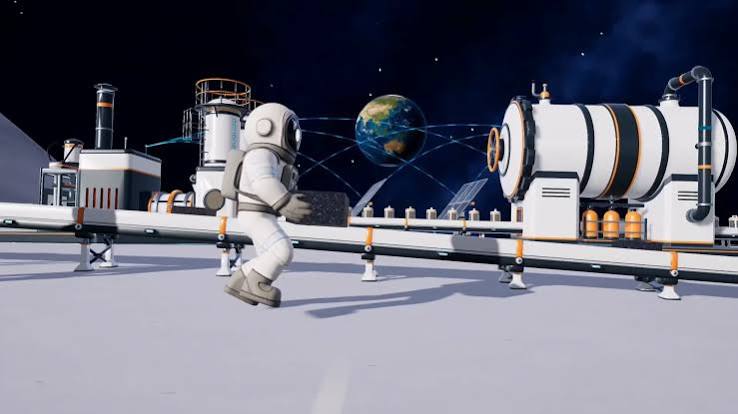
The game and its updates introduce automation-related elements, including conveyors, mergers, splitters, and the J.O.O.N.A.S. cleaning robot. These systems expand the experience beyond simply collecting dust by hand. <Cite refs={["turn537111search0","turn537111search5","turn537111search9"]}/>
Moving Beyond Manual Work
At the beginning, almost every task requires direct player involvement. This creates a simple gameplay loop, but it can become repetitive after extended sessions.
Automation provides a different objective: build a system that performs parts of the work more efficiently.
Players can start thinking about how materials move through the operation and how machines should be arranged to reduce unnecessary handling.
This introduces a light factory-management element that may appeal to fans of incremental and automation games.
Planning Production Systems
Automation becomes more interesting when individual machines need to work together.
A system that collects material but cannot move it to the next stage is not particularly useful. Players need to consider connections, available inputs, and the overall flow of resources.
This makes planning an important skill.
Instead of focusing only on cleaning speed, players begin evaluating the efficiency of the entire operation.
Why Automation Improves Replayability
Automation provides long-term goals beyond purchasing a better toothbrush or vehicle.
Players who enjoy optimization can spend time improving layouts, expanding infrastructure, and finding more effective ways to manage resources.
This adds depth to a game that might otherwise rely too heavily on repetitive manual activity.
7. Multiplayer and Cooperative Gameplay
One of Moon Sweepers' most attractive features is its online cooperative mode.
The game supports lobbies of up to 16 players, allowing friends to work together on the same lunar cleaning project. Players can divide the workload across different areas or concentrate on one location as a group. <Cite refs={["turn537111search1","turn537111search2"]}/>
Working Together
Cooperative gameplay gives the cleaning process a social dimension.
One player might focus on collecting dust, while another handles deliveries or works on a different part of the surface. As the operation grows, players can coordinate their activities to make better use of available equipment and infrastructure.
This division of work can make large objectives feel more manageable.
Playing With Friends
Moon Sweepers has a naturally humorous premise that works well in multiplayer.
The idea of a group of astronauts attempting to clean the Moon with basic equipment creates opportunities for funny conversations and unexpected situations.
The game does not need complicated competitive systems to make cooperation entertaining. Simply working toward a shared objective can provide enough motivation for a group of friends.
Solo Versus Cooperative Play
Solo players have complete control over their own progress and can work at their preferred pace.
Multiplayer players gain the advantage of shared effort, but cooperation also depends on communication and organization.
The best option depends on personal preference. Players who enjoy quiet, methodical progression may prefer solo sessions, while those who enjoy social simulation games may find multiplayer more rewarding.
8. Graphics, Sound, and Overall Presentation
Moon Sweepers uses a first-person perspective that places players directly inside the lunar cleaning operation.
Its presentation focuses on making the environment and equipment easy to understand. Players need to see where dust remains, recognize the equipment they are using, and understand how the operation changes as it expands.
The Lunar Setting
The Moon provides a distinctive environment for a cleaning simulation.
Instead of familiar household locations or ordinary city streets, players work across a science-fiction landscape that gives the central activity a humorous sense of scale.
The contrast between a simple cleaning tool and an enormous lunar surface is a major part of the game's identity.
Visual Feedback
The visible cleaning effect helps reinforce progression.
Watching a dusty area become clearer gives players immediate feedback and makes the result of each session easy to recognize.
As additional equipment and machinery become available, the growing operation also becomes more visually interesting.
Sound and Atmosphere
Sound design supports the practical nature of the gameplay.
The most important audio feedback comes from interacting with equipment and moving through the environment. The overall presentation is designed around a relaxed simulation experience rather than dramatic combat or intense action.
This approach suits the game's concept. Players can concentrate on their tasks without needing a constant stream of dramatic events.
Overall, Moon Sweepers is strongest when players enjoy steady progression and visible results. Its weaknesses are mostly connected to its deliberate pace and the repetitive nature of its central activity.
10. Rating and Final Verdict
Moon Sweepers offers a distinctive simulation experience built around an unusual but effective idea. Its simple cleaning mechanics create an accessible starting point, while equipment upgrades, vehicles, depots, and automation gradually introduce more management depth.
The cooperative mode also adds considerable potential. Working with friends can make repetitive activities more enjoyable and gives players an opportunity to divide responsibilities across a large project.
However, the game is not equally suited to everyone. Its slow opening, repeated cleaning tasks, and focus on gradual progression may disappoint players who prefer constant action or immediate rewards.
Rating
- Gameplay: 8.5/10
- Cleaning Mechanics: 8.7/10
- Exploration: 8.2/10
- Equipment Progression: 8.8/10
- Automation System: 8.7/10
- Multiplayer Experience: 9.0/10
- Graphics and Presentation: 8.3/10
- Sound and Atmosphere: 8.1/10
- Replayability: 8.6/10
- Overall: 8.6/10
Final Verdict
Moon Sweepers is a creative choice for players who enjoy simulation games that reward patience, organization, and gradual improvement.
Its most memorable feature is the contrast between the enormous task of cleaning the Moon and the humble equipment provided at the beginning. What initially feels like a small and repetitive job gradually develops into a larger operation involving better tools, transportation, infrastructure, and automation.
The progression system gives players a clear reason to continue, while visible cleaning results make their efforts feel worthwhile. Cooperative multiplayer strengthens the experience by allowing groups to share responsibilities and work toward common goals.
The main limitation is that the early gameplay can feel slow. Players must accept a certain amount of repetition before reaching the more advanced systems. Those who enjoy incremental progression are likely to appreciate this structure, while players looking for immediate excitement may prefer a different genre.
For fans of relaxing simulation games, cleaning games, and automation experiences, Moon Sweepers offers an appealing combination of humor and long-term development.
Conclusion
Moon Sweepers takes a simple activity and turns it into an unusual space-based management adventure. Starting with a toothbrush and an enormous lunar cleaning assignment, players gradually develop their operation through resource collection, equipment upgrades, improved carrying capacity, depots, vehicles, and automation.
The game's strongest quality is its progression. Every improvement helps players complete the task more efficiently, and the visible transformation of the lunar surface provides a satisfying sense of accomplishment. The ability to cooperate with up to 16 players also gives the experience a social element that makes large projects more enjoyable.
Although the opening stages can feel repetitive and the game may not appeal to players who prefer fast-paced action, its gradual development offers a rewarding experience for the right audience.
With an overall rating of 8.6/10, Moon Sweepers is worth considering for players who enjoy relaxing simulation gameplay, resource management, automation, and cooperative projects. Its humorous premise, clear progression system, and large multiplayer potential make it a distinctive addition to the simulation genre.