.webp)
Cities: Skylines 2: 10 Pro Traffic Tips to End Gridlock Forever
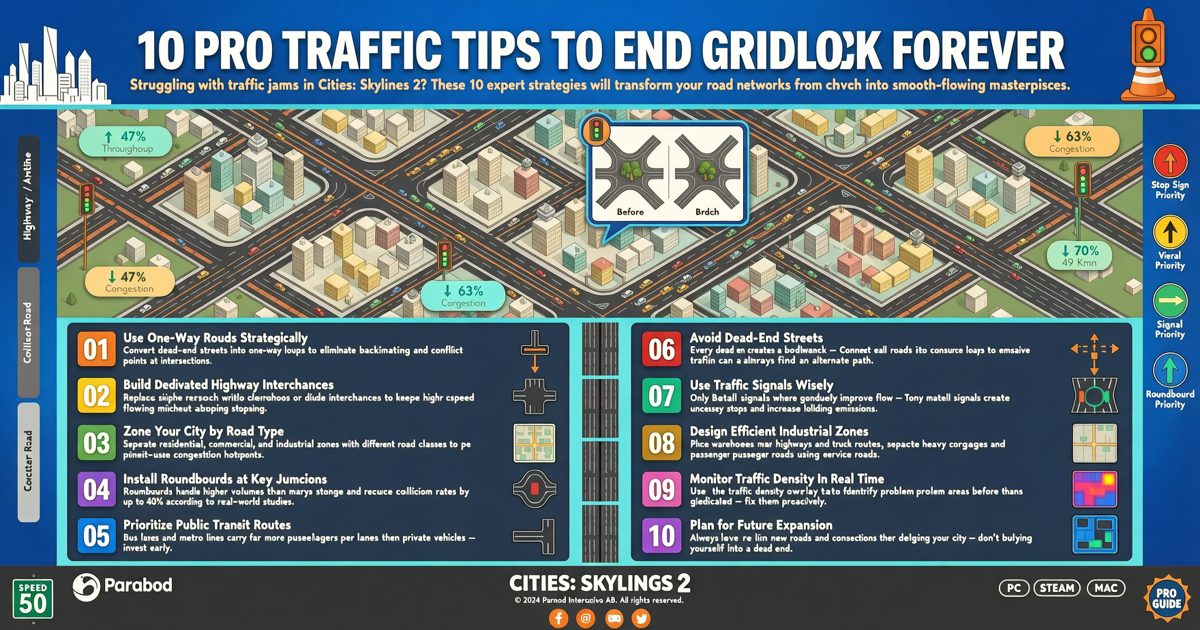
Master the Flow: Essential Traffic Management in Cities: Skylines 2
Traffic congestion is the bane of every city builder. In Cities: Skylines 2, a poorly planned road network can lead to gridlock, frustrated citizens, and stalled growth. But with the right strategies, you can keep traffic flowing smoothly. Here are 10 pro tips to become a true traffic engineer.
1. Embrace the Road Hierarchy
The single most important concept is the road hierarchy. Think of your roads as a pyramid: highways at the top, arterial roads next, then collectors, and finally local streets. Highways carry high-speed, long-distance traffic. Arterials connect neighborhoods to highways. Collectors distribute traffic within districts, and local streets provide direct access to buildings. Never connect a local street directly to a highway — that’s a recipe for jams.
2. Use Roundabouts Strategically
Roundabouts are your best friend. They handle intersections without traffic lights, keeping traffic moving. Place them where arterial roads meet, or at busy interchanges. In Cities: Skylines 2, you can build custom roundabouts using the road tools. Keep them small and avoid placing buildings too close to the roundabout exits to prevent backups.
3. Avoid Unnecessary Intersections
Every intersection is a potential bottleneck. Minimize them by using longer blocks and limiting cross streets. On arterial roads, space intersections far apart. Consider using one-way pairs (two parallel one-way streets) to reduce crossing traffic. Also, avoid creating four-way intersections where possible — T-junctions are more efficient.
4. Leverage Public Transport
Public transport reduces the number of cars on the road. Build a robust network of buses, trams, metros, and trains. Ensure your residential, commercial, and industrial zones are well-connected. In Cities: Skylines 2, the new transport hub buildings allow seamless transfers between modes. Don't forget pedestrian paths: walking and biking paths can significantly cut short car trips.
5. Plan for Freight and Industry
Industrial zones generate heavy truck traffic. Give them direct access to highways via dedicated freight roads. Use cargo train terminals and cargo harbors to move goods long distances without trucks. Also, avoid mixing heavy truck routes with residential streets.
6. Use Traffic Lights Wisely
Traffic lights can help or hurt. In low-traffic areas, remove them to let cars flow. In high-traffic intersections, timed lights can improve throughput. Cities: Skylines 2 allows you to toggle lights and adjust timing with the traffic manager tool. Experiment with different settings.
7. Build Efficient Interchanges
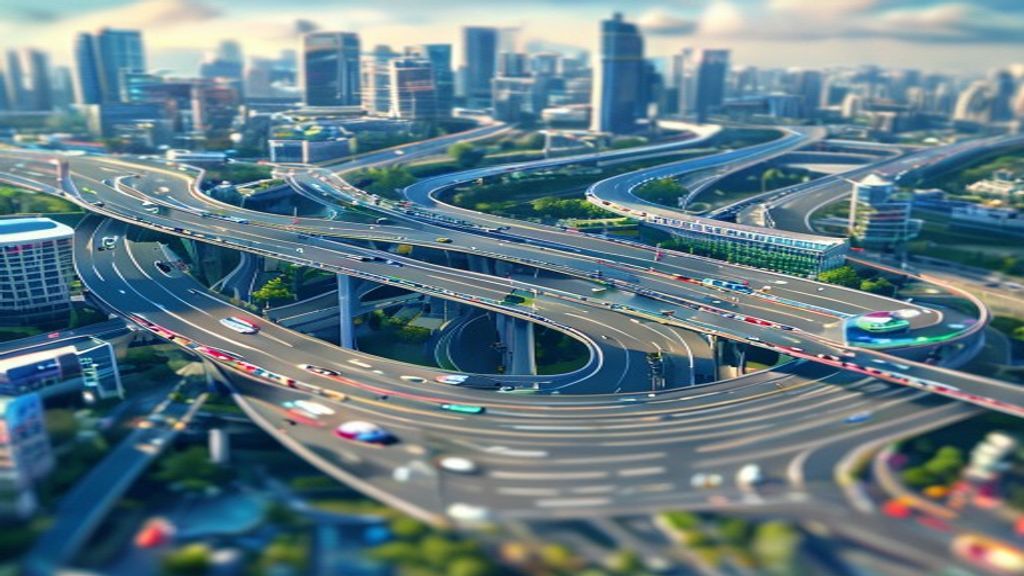
Highway interchanges can be beautified but must be functional. Stick to proven designs like the cloverleaf or diamond interchange. Avoid weaving by using collector-distributor roads. The game’s road tools let you create custom interchanges, but start with simple ones and upgrade as traffic grows.
8. Zone with Traffic in Mind
Zone placement affects traffic patterns. Place high-density commercial near transit hubs and along arterial roads, not on local streets. Keep industrial zones away from residential areas to reduce commuter traffic. Use mixed-use zones (if unlocked) to shorten trips.
9. Monitor and React with Data
Use the traffic overlay to see congested areas in red. The route tool shows where cars are going. Identify root causes: is it a bottleneck, a poorly placed intersection, or too many cars? Adjust accordingly. Also, check the public transport line view to balance passenger loads.
10. Don't Forget Pedestrians and Bikes
Walking and cycling are the most efficient modes. Build extensive pedestrian paths, especially in city centers. Use pedestrian streets (if available) to create car-free zones. Bike lanes encourage cycling and reduce car trips for short distances. Happy pedestrians mean fewer cars.
Master these tips, and your city will flow like a dream. Remember, traffic management is iterative — always monitor and tweak. Happy building!