.webp)






In an era where many strategy games lean toward accessibility and streamlined systems, Xenonauts 2 takes a different path. It embraces complexity, tactical depth, and player-driven decision-making, offering a modern revival of classic alien invasion strategy games.
Developed by Goldhawk Interactive, Xenonauts 2 serves as both a sequel and a reimagining of the original Xenonauts, itself heavily inspired by the legendary X-COM: UFO Defense. Set during an alternate Cold War timeline, the game places players in charge of a secret multinational organization tasked with defending Earth from an escalating extraterrestrial threat.
Unlike many modern strategy titles, Xenonauts 2 does not aim to simplify. Instead, it doubles down on systems, realism, and consequence. Every decision matters, every mission carries risk, and every loss can shape the course of the war.
A Cold War Setting with a Sci-Fi Twist
Global Tension Meets Alien Threat
The game is set in an alternate version of the early 2000s, where the Cold War never truly ended. Instead, global superpowers remain locked in uneasy competition, maintaining fragile alliances while secretly preparing for conflict.
Into this already unstable world comes an alien invasion.
Governments cannot openly acknowledge the threat, leading to the creation of the Xenonauts, a covert defense organization operating in the shadows. Players take command of this group, managing both military operations and diplomatic relationships.
A War Fought in Secret
Unlike typical war games where battles are public and large-scale, Xenonauts 2 focuses on hidden conflict. The organization must operate discreetly, intercepting alien activity before it becomes widespread.
This secrecy adds tension to every mission. Failure does not just mean losing soldiers. It can mean losing the trust and funding of entire nations.
Strategic Layer – Defending the World
The Geoscape System
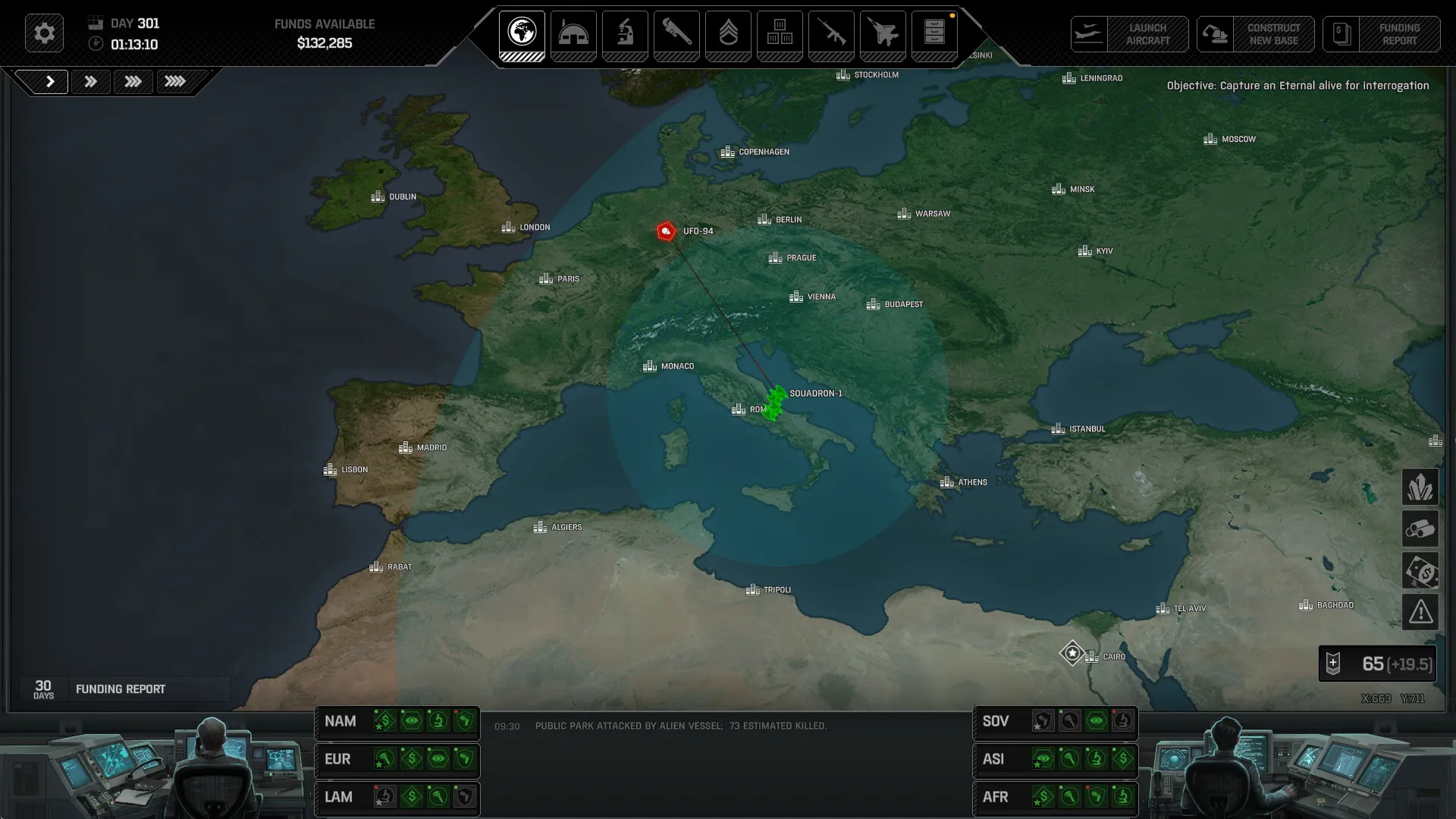
The strategic layer of Xenonauts 2 takes place on a global map known as the Geoscape. Here, players manage the overall defense of Earth.
Responsibilities include:
- tracking UFO activity
- deploying interceptor aircraft
- managing global panic levels
- building and upgrading bases
The Geoscape operates in real time, forcing players to constantly monitor multiple threats across the planet.
Base Management and Expansion
Players must construct and manage underground bases that serve as operational hubs.
Key facilities include:
- research labs
- engineering workshops
- living quarters
- radar systems
- hangars for aircraft
Expanding bases allows players to cover more territory, but it also increases costs and logistical complexity.
Tactical Combat – Turn-Based Precision
Ground Missions
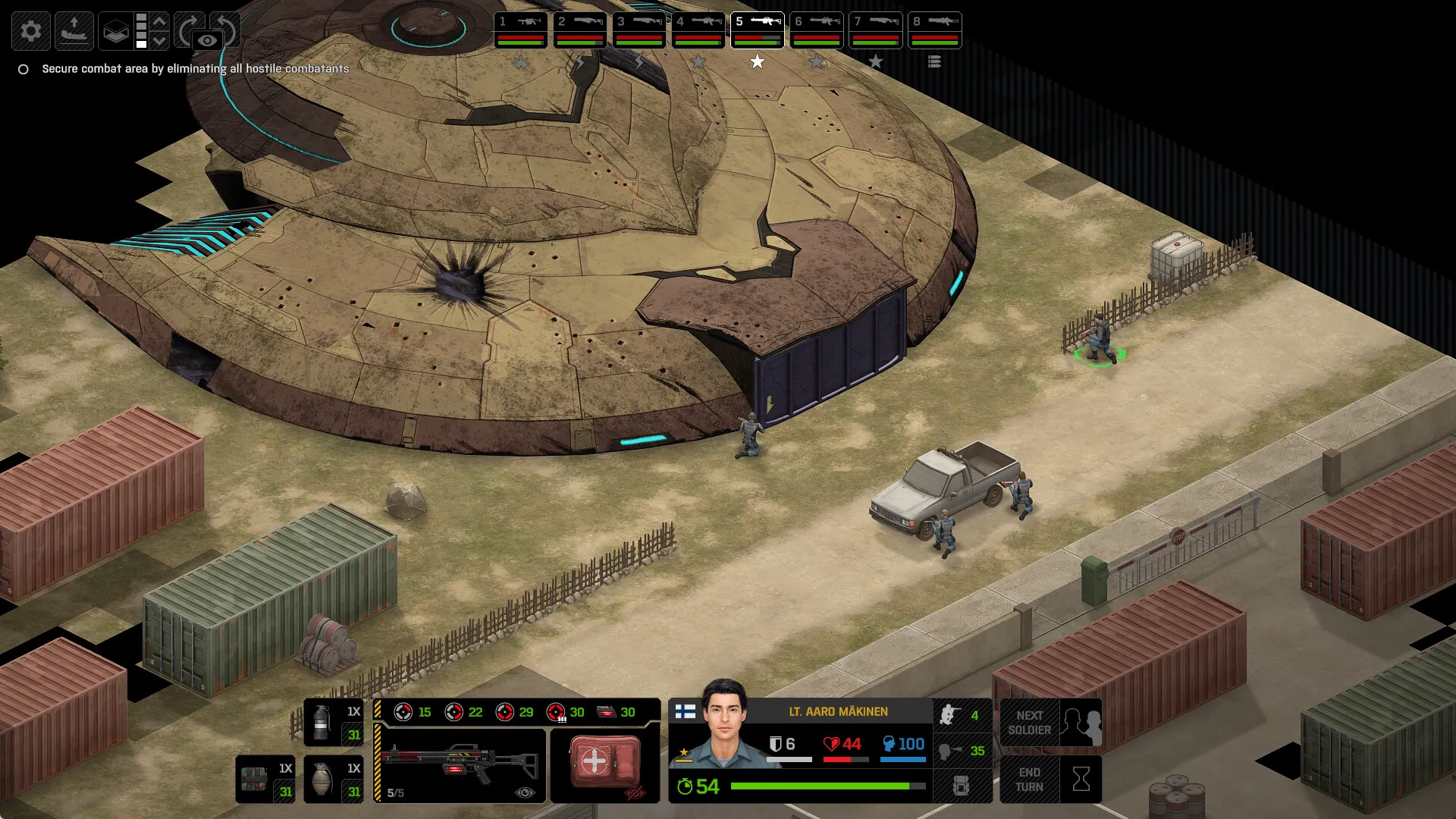
When alien activity is detected, players deploy squads of soldiers to investigate and neutralize threats.
Combat takes place in turn-based tactical missions where every movement and action is carefully planned.
Players must consider:
- line of sight
- cover positions
- weapon ranges
- soldier stamina
Positioning is critical. A single mistake can result in heavy casualties.
Ballistic and Realistic Combat Feel
Unlike more cinematic strategy games, Xenonauts 2 emphasizes realism.
Weapons behave with:
- realistic accuracy
- limited ammunition
- reaction fire mechanics
Enemies can ambush players, and soldiers can die permanently.
This creates a constant sense of tension during missions.
Air Combat and Interception
Intercepting UFOs
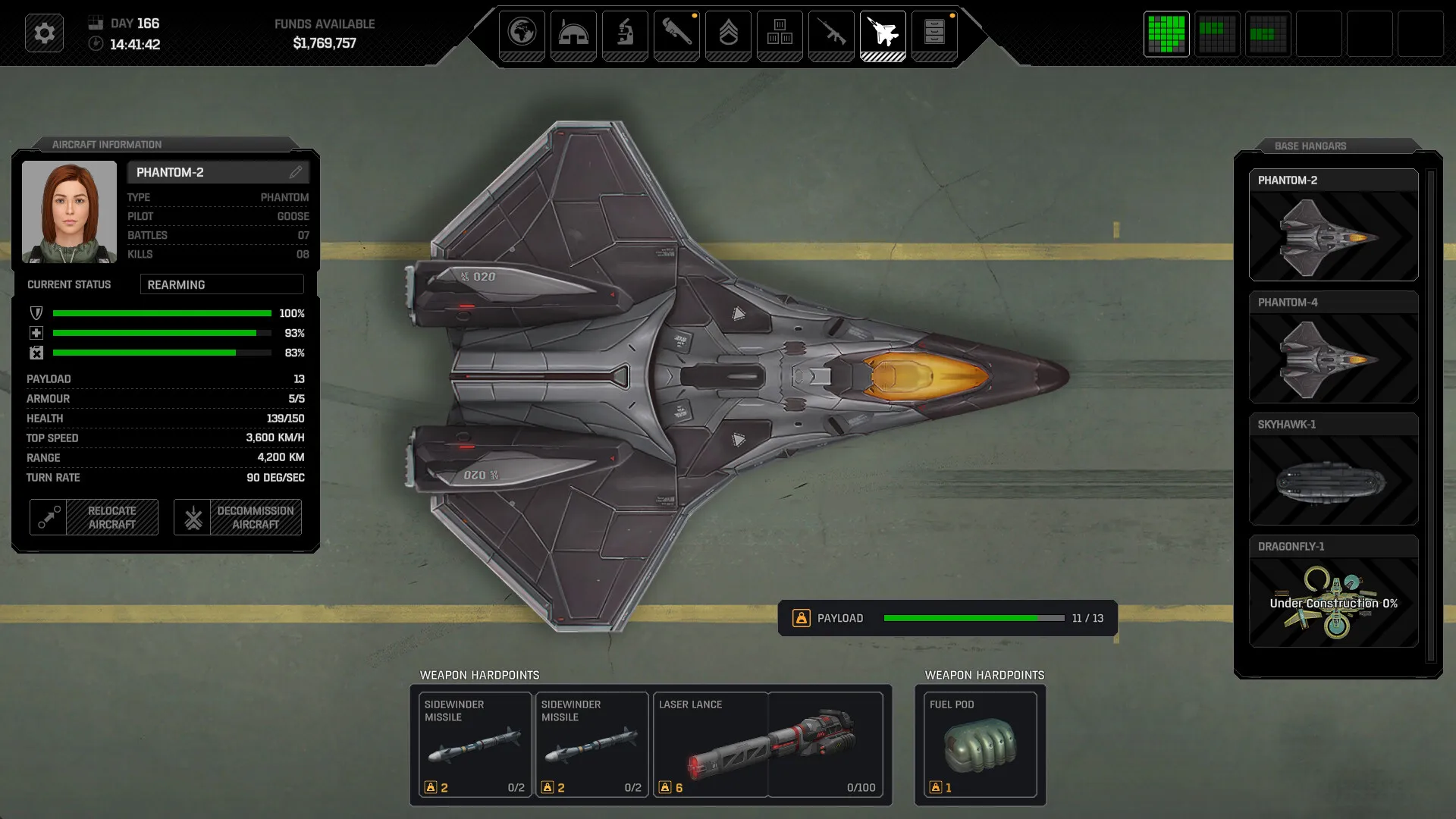
One of the defining features of the game is its air combat system.
Players must scramble interceptor aircraft to engage UFOs before they reach populated areas.
Air combat requires:
- managing fuel levels
- coordinating multiple aircraft
- choosing when to engage or retreat
Strategic Importance
Successful interceptions can:
- prevent alien missions
- recover valuable alien technology
- reduce global panic
Failure allows aliens to expand their influence.
Research and Technological Progression
Studying Alien Technology
After missions, players can research recovered alien artifacts and bodies.
Research unlocks:
- advanced weapons
- improved armor
- new aircraft designs
- alien insights
This progression is essential for keeping up with increasingly powerful enemies.
Engineering and Production
Engineers use research discoveries to create new equipment.
Players must manage:
- resource allocation
- production time
- equipment distribution
Balancing research and production is key to long-term success.
Soldier Development and Squad Management
Individual Soldiers Matter
Each soldier in Xenonauts 2 is an individual with unique stats and progression.
Attributes include:
- accuracy
- strength
- reflexes
- bravery
As soldiers survive missions, they improve and become more valuable.
Permadeath and Emotional Impact
When a soldier dies, they are gone permanently.
This mechanic creates strong emotional attachment to squad members. Losing a veteran soldier can significantly impact gameplay.
Enemy Design and Alien Threat Escalation
Varied Alien Species
The alien invasion is not static. Players encounter different species with unique abilities and tactics.
Some aliens rely on:
- ranged attacks
- psychic abilities
- heavy armor
- stealth
This forces players to adapt their strategies constantly.
Escalating Threat Levels
As the game progresses, alien forces become more aggressive and technologically advanced.
New enemy types, stronger UFOs, and larger missions increase the difficulty.
Visual Style and Presentation
Functional, Tactical Design
The visual style of Xenonauts 2 prioritizes clarity over spectacle. Maps are designed to provide clear tactical information.
Environments include:
- urban areas
- industrial zones
- rural landscapes
- alien crash sites
Each map type presents unique tactical challenges.
Improved Graphics Over the Original
While maintaining its classic style, the sequel improves lighting, animations, and environmental detail compared to the first game.
Complexity and Learning Curve
A Game for Strategy Enthusiasts
Xenonauts 2 is not designed for casual play. It requires patience, planning, and a willingness to learn complex systems.
Players must:
- manage multiple systems simultaneously
- plan long-term strategies
- accept and learn from failure
Rewarding Depth
For those willing to invest time, the game offers a deeply rewarding experience. Success feels earned, and every victory carries weight.
Strengths and Criticisms
Strengths
The game excels in several areas:
- deep strategic gameplay
- faithful revival of classic mechanics
- meaningful player decisions
- high replayability
Criticisms
Some players note challenges such as:
- steep learning curve
- slower pacing
- less cinematic presentation
These elements may limit its appeal to a broader audience.
The Future of Xenonauts 2
Ongoing Development
As a modern strategy title, Xenonauts 2 continues to receive updates and improvements.
Developers have focused on:
- balancing gameplay systems
- improving UI and accessibility
- expanding content
A Niche but Dedicated Audience
The game appeals strongly to fans of classic tactical strategy games. Its success demonstrates that there is still demand for deep, complex strategy experiences.
Conclusion
Xenonauts 2 stands as a powerful reminder that complexity and depth still have a place in modern gaming. By embracing the systems and philosophy of classic strategy games while refining them for a new generation, it delivers an experience that is both challenging and rewarding.
From managing global defenses and intercepting UFOs to leading soldiers in tense turn-based combat, every aspect of the game reinforces its core theme: humanity is outmatched, but not defeated.
For players seeking a thoughtful, strategic, and unforgiving tactical experience, Xenonauts 2 offers one of the most compelling alien invasion simulations available today.